Not all terrains are the same. Anyone who works with excavators knows that the challenge is often not just digging, but achieving the right finish.
Do you need to work on sloped ground or dig trenches with greater precision? Choosing the right trapezoidal bucket can make all the difference.
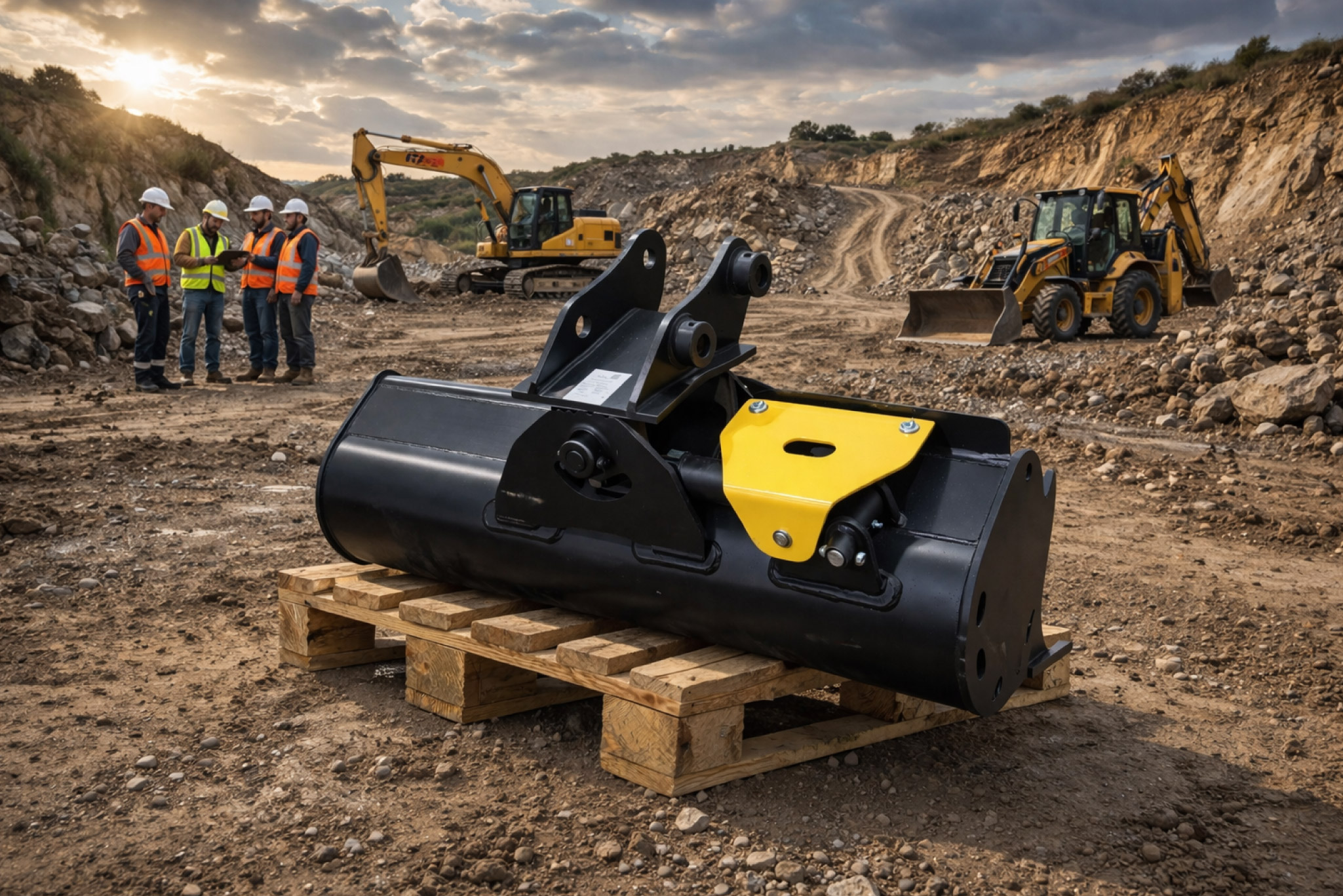
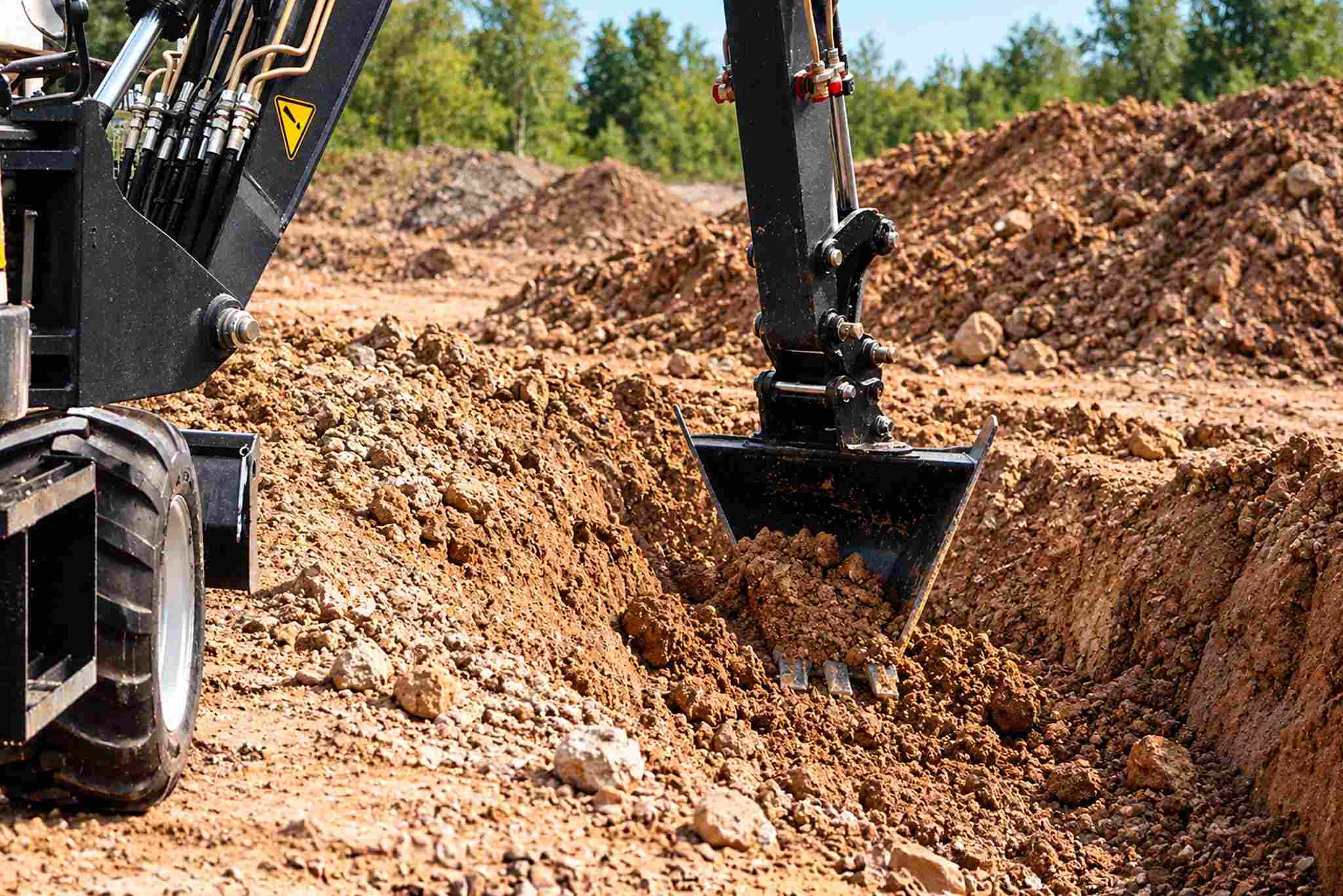
This type of attachment is mainly used for trenching, drainage, slope creation and finishing work with mini excavators and backhoe loaders.

When the job requires greater control over the bucket angle, a common question arises: should you choose a mechanical or hydraulic tilt system?
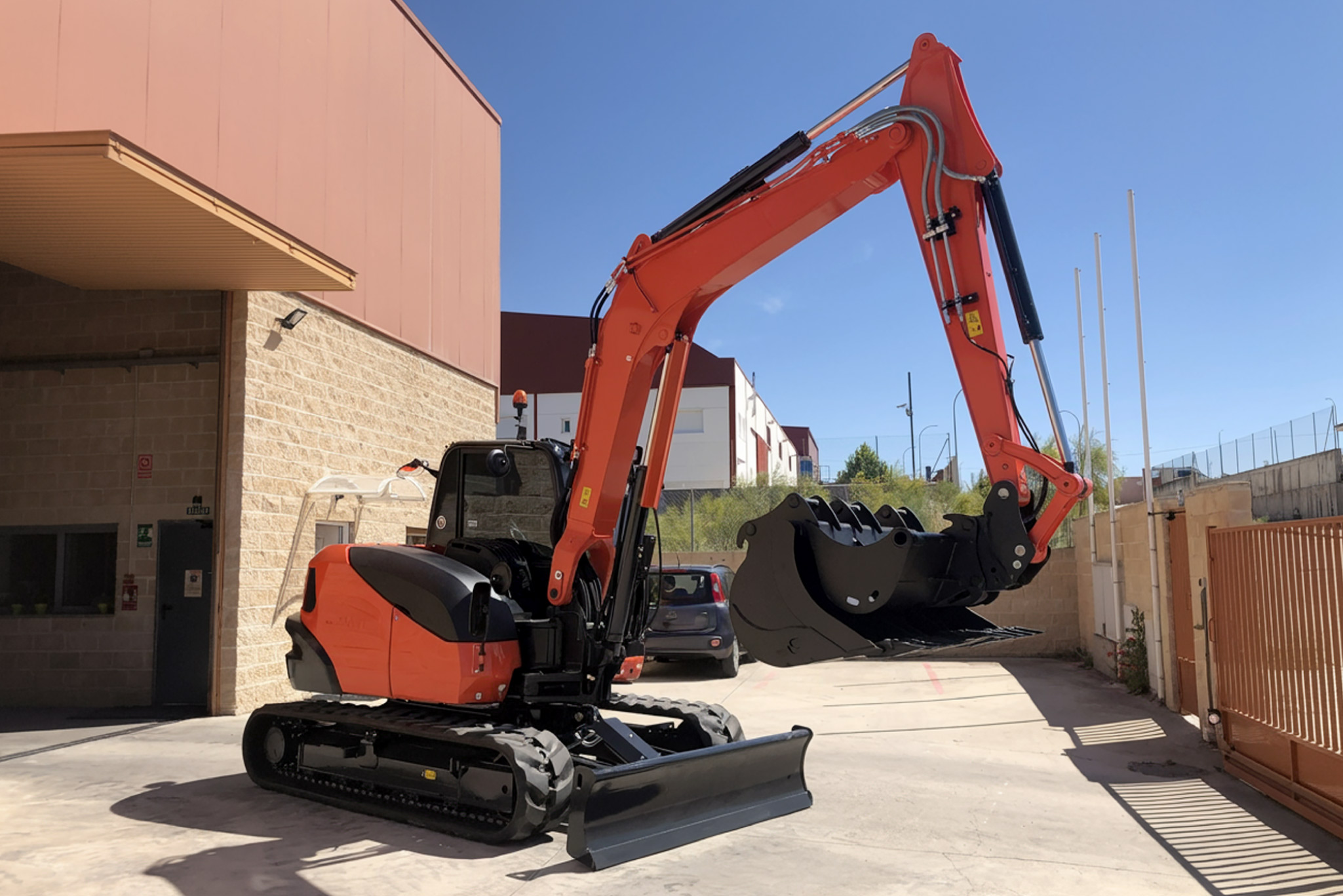
The answer depends on the type of work, how often the attachment will be used and the machine on which it will be installed. At Camponesa you can find trapezoidal buckets for mini excavators and backhoe loaders, with different widths and configurations.
What is a trapezoidal bucket and what is it used for?
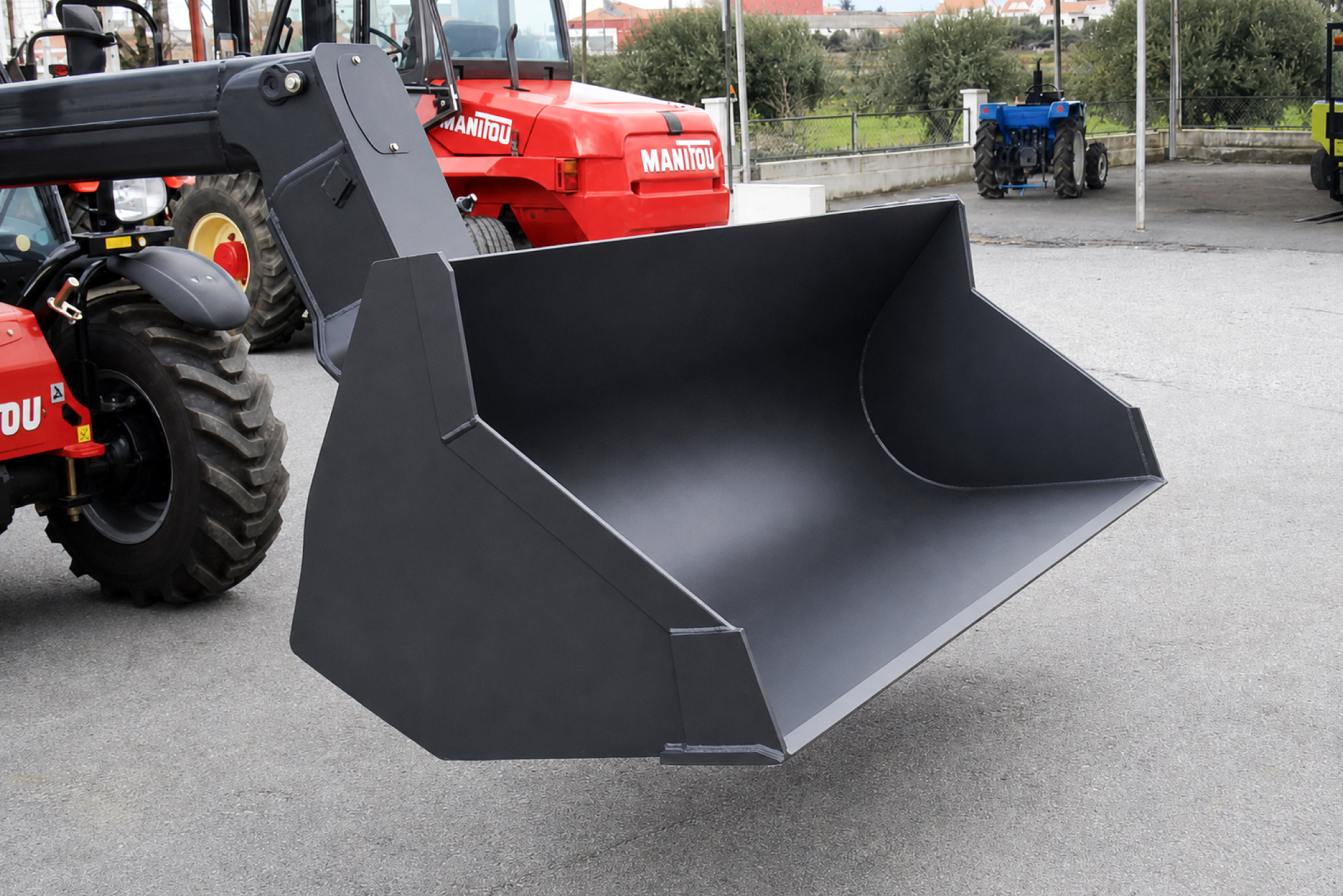
A trapezoidal bucket is an attachment for mini excavators and backhoe loaders, designed for jobs where the geometry of the ground is important.
Unlike a conventional bucket, its shape is adapted to create trenches, slopes and other profiles where precise dimensions and angles are required.
It is especially useful for:
- Drainage and infrastructure trenches;
- Creating and finishing slopes;
- Ground preparation and surface grading;
- Finishing work on construction sites.
When should you use a trapezoidal bucket?
A trapezoidal bucket should be used when the job requires more than simply removing or moving soil. It is the right solution when specific dimensions, slopes or ground profiles must be respected, reducing the need for later corrections and delivering a more consistent result.
What is the difference between mechanical and hydraulic tilt?
The main difference is how the bucket angle is adjusted. Mechanical tilt requires a manual setup before work begins, while hydraulic tilt allows the operator to adjust the angle through the machine’s hydraulic system without stopping the operation.
| Criterion | Mechanical tilt | Hydraulic tilt |
| Angle adjustment | Manual, before work begins | Through the machine’s hydraulic system |
| Adjustment during operation | The machine must stop for readjustment | Can be adjusted while working |
| Ideal use | Occasional work or a fixed angle | Frequent and demanding work |
| Main advantage | Simplicity and lower investment | Greater control and versatility |
What are the advantages of each system?
There is no single best system for every situation. Each option offers different advantages depending on the demands of the job.
Mechanical tilt: simple and efficient
Mechanical tilt is a practical and economical option, especially when the angle is set before work, frequent adjustments are not required and the attachment is used occasionally.
Hydraulic tilt: greater control during work
Hydraulic tilt is advantageous when the job requires different adjustments, the equipment is used regularly or the attachment must adapt to changing ground conditions. It reduces manual interruptions and makes demanding operations easier.
Which option is best for uneven ground?
On ground with different slopes or changing levels, hydraulic tilt can offer a significant advantage because the operator can adapt the attachment directly from the machine controls. For example, while opening a drainage trench, small corrections can be made quickly and continuously as the machine moves forward.

How do you choose a bucket compatible with your machine?
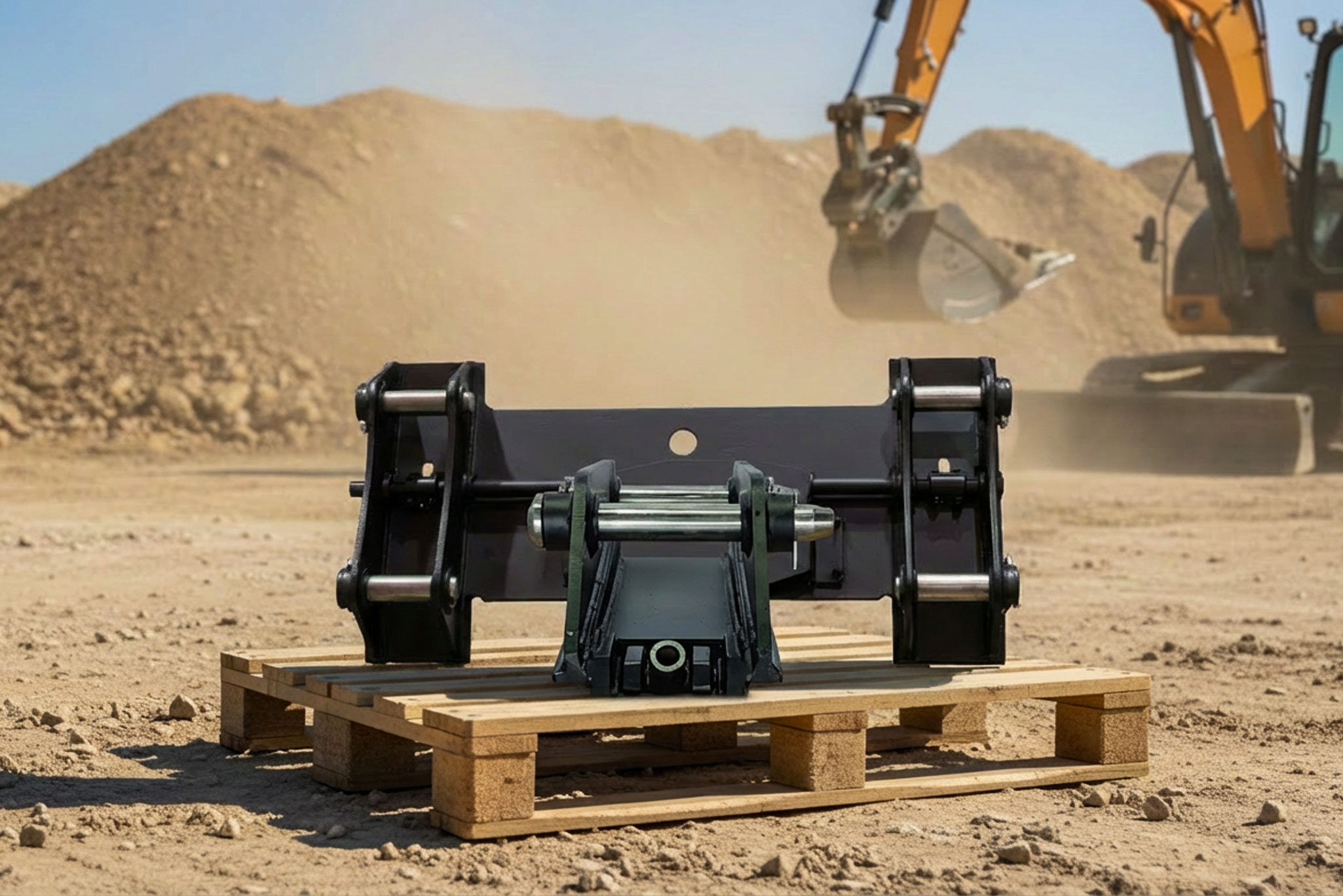
Check the machine weight and capacity, the bucket width, the type of work, the hydraulic flow and pressure, the connection type, the frequency of use and the attachment system. Correct sizing improves stability, control, safety and performance.
When using a quick hitch, changing between attachments becomes faster and easier, increasing the versatility of the machine.
Choose the right trapezoidal bucket for your machine
Camponesa manufactures attachments for mini excavators and backhoe loaders, including trapezoidal buckets, cleaning buckets and other equipment in different sizes and configurations.
Explore the Camponesa trapezoidal bucket range and find the attachment suited to your machine and next project.
Still have questions?
What is the difference between a trapezoidal bucket and a cleaning bucket?
A trapezoidal bucket creates defined ground profiles, while a cleaning bucket is mainly used for grading, cleaning and moving material across wider areas.
Can a trapezoidal bucket be used on mini excavators?
Yes. Models are available for different machine sizes, including mini excavators. Compatibility must always be checked.
Can it be used in confined spaces?
Yes. Choosing the right width makes it suitable for areas with limited room to manoeuvre.
Can it be used with a quick hitch?
Yes, provided the hitch and the attachment are compatible.
Which should you choose: mechanical or hydraulic tilt?
Choose mechanical tilt for occasional work, a fixed profile and a lower investment. Choose hydraulic tilt for frequent use, uneven ground and angle adjustments during operation.
A tool for every job.