
In the industrial and construction sectors, operating costs related to heavy machinery can quickly escalate if not properly controlled. One of the main factors influencing these costs is fuel consumption, especially with rising fuel prices and growing awareness of more sustainable operations.
In this context, efficient management has become a priority for many companies, aiming to reduce expenses while meeting increasingly strict environmental standards.
In this article, we share practical solutions and technical advice to optimise the performance of backhoe loaders, mini excavators, telescopic handlers and compact wheel loaders.
The importance of fuel management in construction equipment
Fuel management is a critical element in ensuring optimal performance and durability of construction equipment such as excavators. Fuel consumption accounts for a significant portion of operating costs, directly affecting profitability and the environmental footprint of businesses in the sector.
Efficient fuel management not only reduces waste but also helps extend the lifespan of machines, lower CO₂ emissions, and save industrial costs in the medium and long term.
Some of the most recommended practices include reducing idle time, optimising operating cycle speeds, and performing regular and thorough maintenance of the engine and hydraulic system.
How to implement efficient fuel management
The first step is to monitor the operational data of your machines. With the help of modern telemetry and tracking systems, it is possible to obtain detailed insights such as:
- Continuous monitoring of fuel consumption, with alerts on irregular patterns or excessive use
- Smart planning of preventive maintenance, based on real-time operating data
- Identification of abnormal operator behaviours that may compromise fleet energy efficiency
Operators themselves play a key role in optimising fuel consumption and, consequently, in reducing industrial costs. Even with well-calibrated machines, driving habits can lead to significant fuel waste.
Investing in training for fuel-efficient driving practices is one of the most effective strategies to boost operational efficiency. Small changes in operator behaviour can lead to substantial savings over time.


Maintenance and technical support
Preventive maintenance is one of the key pillars to ensure energy efficiency. A well-maintained engine consumes less fuel, operates with better performance, and presents a lower risk of failures that could halt production.
Neglecting maintenance means allowing small issues to become major expenses. Clogged filters, degraded oil, or poorly adjusted injection systems increase fuel consumption and compromise the machine’s performance.
Essential maintenance tips to save fuel:
- Regular oil changes and checking the correct viscosity for the type of operation
- Inspection and replacement of air and fuel filters to ensure cleaner and more efficient combustion
- Checking the fuel injection system to prevent waste and performance issues
How to ensure optimal maintenance?
It is essential to adopt a technical and systematic approach. Some best practices include:
- Setting up a preventive maintenance schedule, based on both the manufacturer’s recommendations and actual working conditions (climate, soil type, usage intensity)
- Using technical manuals and standardised checklists to guide inspections and interventions, reducing the risk of human error
- Training operators to recognise signs of failure, such as sudden increases in fuel consumption, unusual noises or loss of power
- Using high-performance lubricants to reduce internal friction and help the engine operate more efficiently with less fuel consumption
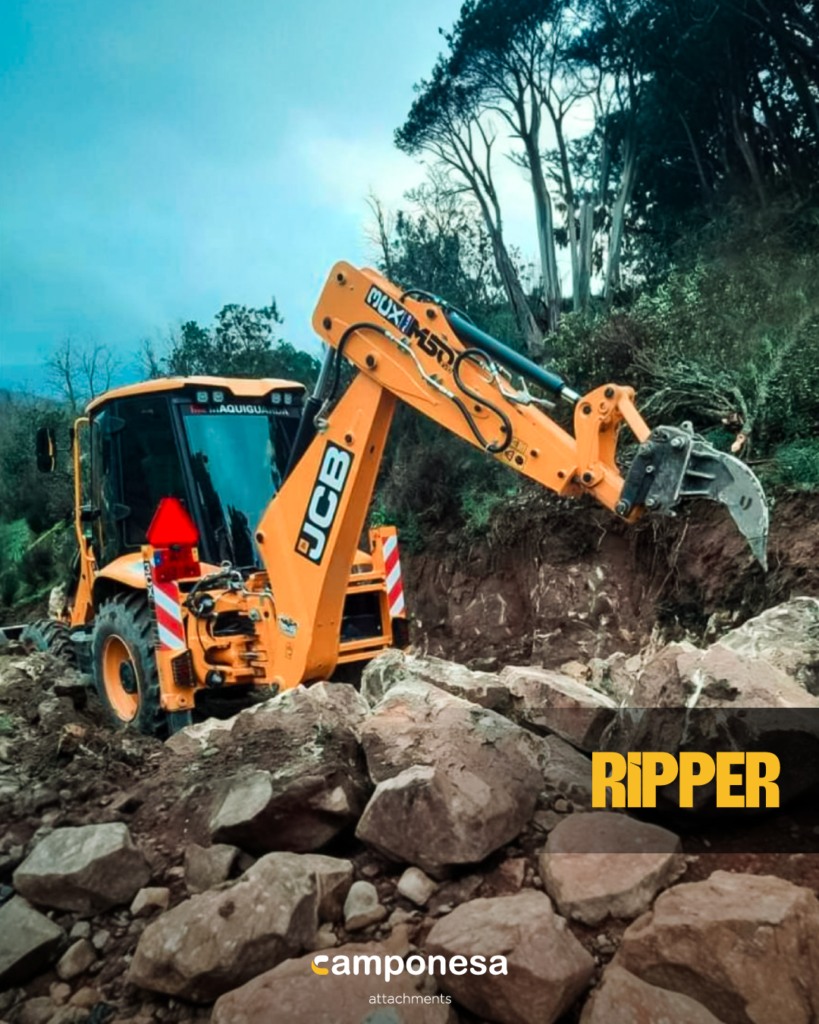
Reducing fuel consumption in backhoe loaders, mini excavators, telescopic handlers, and compact wheel loaders is about much more than just cutting costs. It is no longer merely a cost-saving measure—it has become a key strategy to boost efficiency, reduce industrial expenses, and make operations more sustainable.
By integrating good operational practices, carrying out rigorous preventive maintenance, adopting fleet management technologies, training operators, and aligning with the demands of the energy transition, companies in the construction and heavy industry sectors can achieve significant gains in productivity, competitiveness, and environmental awareness.
At Camponesa, we understand the challenges of operating heavy equipment and offer solutions that directly contribute to energy efficiency and cost reduction—with robust, durable accessories designed to maximise the performance of your construction machinery.
A tool for every job